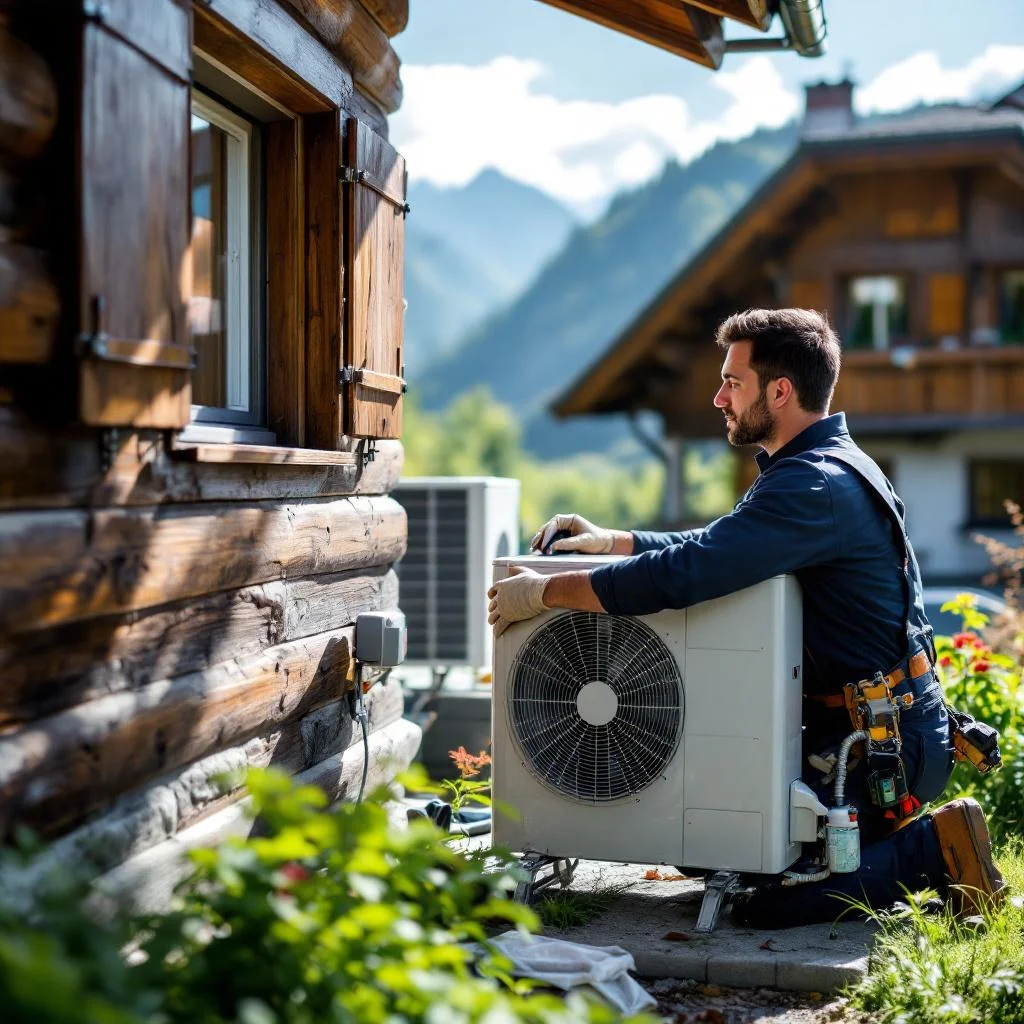
A water heater or boiler supplies hot water to the kitchen, the bathroom and the laundry room. When it breaks down, leaks or becomes clogged with limescale, daily life in the household is affected straight away, and the question arises of whether to repair or replace it.
This page presents the most common jobs, the moments when it is better to call a professional, and the points worth knowing in Western Switzerland. You then describe your need online: the request is passed on to craftspeople and companies in the region, who contact you to prepare a free, no-obligation quote.
Water heaters and boilers: the most common appliances and jobs
The most widespread remains the electric storage boiler: an insulated tank, heated by an element and regulated by a thermostat. In many homes, hot water is instead produced by the building’s boiler or heat pump, with a storage tank connected to the heating circuit. Some houses add solar thermal collectors. Other installations produce hot water on demand, without a large tank.
The work owners most often ask for is as follows:
- complete replacement of an old boiler that is punctured or no longer holds its temperature;
- replacement of a heating element, a thermostat or a safety unit;
- descaling of a tank and checking of the protective anode;
- replacement of a tank connected to a boiler;
- switching from an electric water heater to a more economical system, such as a heat pump dedicated to hot water;
- connection of a new appliance during a kitchen or bathroom renovation.
When to call a professional for your boiler
Some tasks remain within reach of an informed occupant, such as checking the temperature setting or spotting a trace of damp. As soon as the water circuit has to be opened, the electrical connection touched or a safety component handled, a professional is the better choice. Pressurised water, electricity and very hot water make a combination that does not forgive approximation.
Several signs justify a visit:
- a leak or a puddle at the foot of the tank, a frequent sign of corrosion that cannot always be repaired;
- lukewarm water although the setting has not changed;
- a crackling or knocking noise, often linked to limescale;
- regular discharge from the safety valve;
- rusty or foul-smelling water when first drawn;
- a very old appliance whose electricity bill seems to have increased.
Repairing one component often costs less than a replacement, but a corroded tank has no remedy. The on-site diagnosis settles the matter, and a good craftsperson explains their reasoning.
What changes in Western Switzerland: training, rules and canton
In Switzerland, the plumbing and heating trades are learned through basic vocational training leading to a federal certificate of proficiency (CFC). Asking the company which professionals will work on your site is a normal question, as is asking about the company’s liability insurance: ask it and get the answer in writing.
Depending on the nature of the work, a permit may be required. A like-for-like replacement rarely involves a heavy procedure, but a change of energy source, an installation on a façade or roof, or a protected building changes things. In every case, check with the commune or the competent cantonal office before ordering.
Geneva
In Geneva, building permits are issued by the canton, through the Office des autorisations de construire. On energy, the cantonal energy law (LEn) applies, and the Office cantonal de l’énergie (OCEN) is the contact for grants under the Buildings Programme. Many rental buildings are run by property managers: they generally order the replacement of a shared boiler. The old town and protected districts call for additional care.
Vaud
In the canton of Vaud, the building permit is issued by the municipality, with the file going through the cantonal permits centre (CAMAC) when State services must give an opinion. The Vaud energy law and the cantonal energy directorate govern the field, with a cantonal grants programme. The old towns and the Lavaux vineyard, a World Heritage site, call for particular attention.
Valais
In Valais, the building permit is issued by the commune in the building zone, and by a cantonal commission outside the building zone. The cantonal service for energy and hydropower manages the grants programme. Chalets and second homes, subject to the federal law on second homes in the communes concerned, have their own constraints: a chalet used only intermittently also raises practical questions about draining and frost protection.
Fribourg
In Fribourg, building permit applications are submitted through the cantonal FRIAC platform, and the permit is issued by the prefecture or the commune depending on the type of work. The cantonal energy service administers a grants programme. The canton is bilingual, and the old towns are protected: a quote can be written in either language.
Neuchâtel
In the canton of Neuchâtel, applications go through the cantonal SATAC counter, with the decision taken by the commune. The cantonal service for energy and the environment runs a grants programme. The watchmaking heritage of La Chaux-de-Fonds and Le Locle, listed by UNESCO, is worth mentioning from the outset if the building is concerned.
Jura
In Jura, the building permit is issued by the commune or by the canton depending on the scale of the project. The cantonal energy section manages the grants programme. The old towns of Delémont, Porrentruy and Saint-Ursanne are good reasons to seek information before starting work visible from outside.
Biel/Bienne and the canton of Bern
Biel/Bienne depends on the canton of Bern: the building permit is issued by the commune or the prefecture depending on the project, and the cantonal office for the environment and energy manages a grants programme. Biel/Bienne is officially bilingual, French and German, which can mean documents in both languages.
Grants, where they exist, depend on the conditions set by each canton, often before work begins. Contact the cantonal energy service before signing a quote.
Preparing your water heater quote request
The more precise your description, the more comparable the quotes will be. Gather this information before filling in the form:
- the current type of appliance (electric boiler, tank on a boiler, other) and, if possible, the make and capacity read from the rating plate;
- the location: cellar, laundry room, cupboard, attic, and the access for bringing in a new appliance;
- the symptom observed: leak, lukewarm water, noise, rising bill;
- your status: owner, co-owner, or tenant with the landlord’s agreement;
- your wishes: like-for-like replacement or change of system;
- photos of the appliance and its connections, if you can.
A craftsperson can then say, even before travelling, what remains to be checked on site.
What a reliable quote itemises, and what makes the cost vary
A usable quote describes each item separately:
- supply of the appliance, with make, model and capacity;
- removal and disposal of the old tank;
- fittings, valves, safety unit and small supplies;
- the electrical connection, if planned;
- labour, commissioning and adjustment;
- payment terms and the validity of the offer.
Several factors make the cost vary without it being possible to put a figure on them in advance. The type of appliance and its capacity weigh heavily, as does access to the room: a boiler in a narrow basement requires more handling. The condition of the existing pipes, the need to rework an electrical installation or an old connection, and the choice to switch to another system also change the bill. Finally, any grants are deducted from the final cost according to cantonal rules. Compare several quotes line by line rather than on the total alone.
Legal warranties on a boiler installed in Switzerland
The Code of Obligations sets deadlines for reporting defects in work. A water heater fixed permanently in a building generally counts as immovable work, for which art. 371 CO provides five years. For movable work, the period is two years. If the contract refers to the SIA 118 standard (the Swiss Society of Engineers and Architects’ general conditions for construction work), its provisions add to or replace these.
In practice, keep the signed quote, the invoice and the appliance’s data sheet. Report a defect in writing as soon as it appears, describing what you observe. A manufacturer’s warranty may also exist: read its terms, as they often differ from the legal warranties.
Boilers and water heaters near you in Western Switzerland
For water heater and boiler work, see the page for your canton:
- canton of Geneva
- canton of Vaud
- canton of Valais
- canton of Fribourg
- canton of Neuchâtel
- canton of Jura
- canton of Bern
Already have an idea of what you need? You can request a quote by describing your project: the request is passed on to craftspeople and companies in the region, who contact you for a free, no-obligation quote.
Updated 29 October 2026