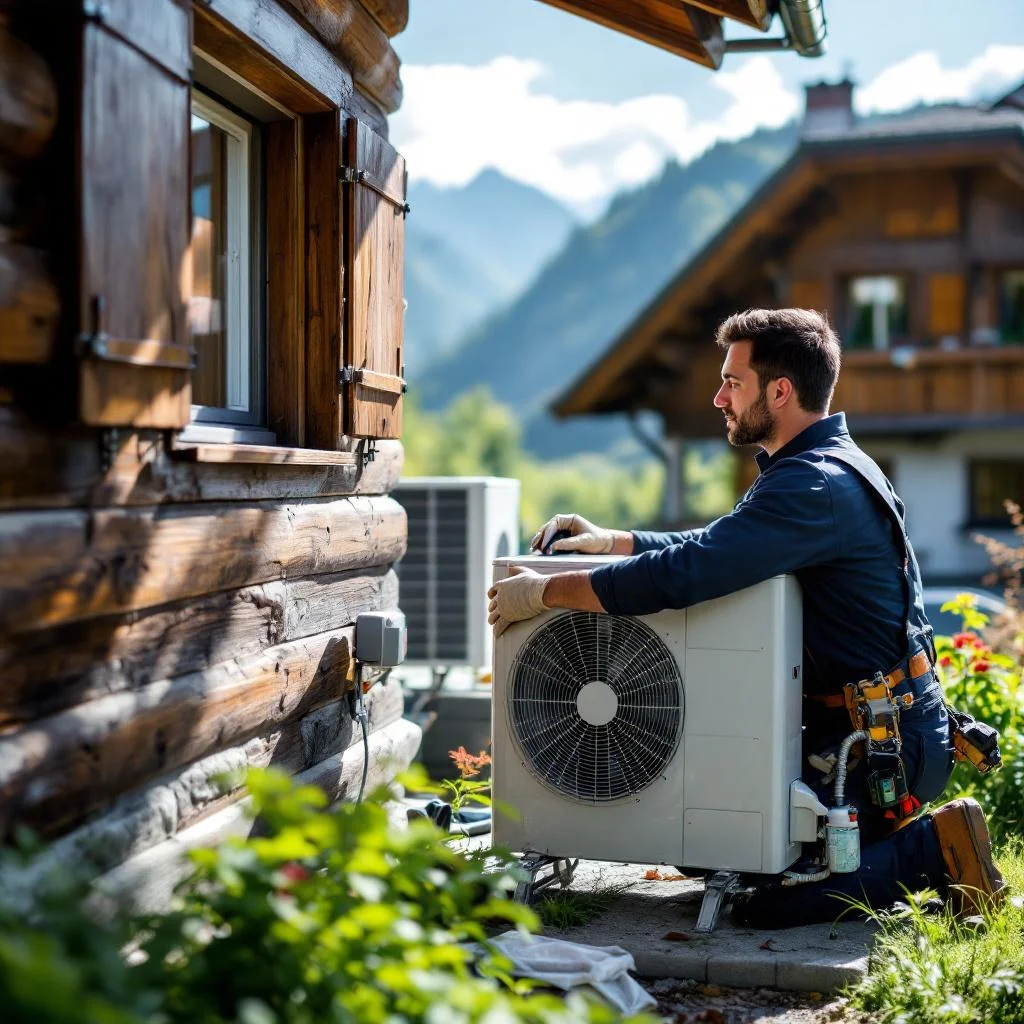
Are you looking for a heating engineer in Yverdon-les-Bains to replace a boiler, install a heat pump or rework a radiator network? This page presents the most common heating works in the second-largest town in the canton of Vaud, the rules to check before you start and how to compare offers. The site passes your request on to tradespeople in the area, who will contact you to prepare a free, no-obligation quote.
The most common heating works in Yverdon-les-Bains
Yverdon-les-Bains has very varied buildings: old-town houses grouped around the castle, rental blocks in more recent districts, villas on the outskirts, and also facilities linked to the thermal centre and the engineering school (HEIG-VD). Each type of building calls for its own interventions.
- Replacing an oil or gas boiler. This is the most frequent request in older apartment blocks and villas whose installation is reaching the end of its life. The question is no longer just “which boiler?” but “which system are you allowed, and is it worthwhile, to install?”.
- Heat pump. It replaces a fossil-fuel boiler or complements an existing installation. The choice between air-to-water and a geothermal probe depends on the plot, the noise level neighbours can accept and the condition of the building. For this specific topic, see also heat pump in Yverdon-les-Bains.
- Connection to district heating. In urban areas, a heat network may serve certain districts. In Yverdon-les-Bains, ask the municipality whether your address can be connected before comparing other solutions.
- Radiators, thermostatic valves and underfloor heating. Replacing radiators, balancing a network or fitting underfloor heating during a renovation are common projects.
- Controls and maintenance. An outdoor sensor, zone programming or a simple adjustment of the heating curve often improves comfort without changing the heat generator.
Lakeside, old town and apartment blocks: what the location changes for your heating
Yverdon-les-Bains lies at the end of Lake Neuchâtel. Winters there are those of a lakeside lowland town, with less snow than the Jura heights or the Vaud Alps, but the heating season is still very real. Your heating engineer should size the installation according to the building itself — floor area, insulation, windows, type of emitters — rather than by a general rule. An oversized generator costs more to buy and performs less well; an undersized one leaves rooms cold on the coldest days.
In the old town and near the castle, buildings are often old, sometimes terraced, with narrow cellars, steep staircases and thick walls. Running pipes or placing a hot water tank or an outdoor unit there takes preparation. If your building is listed in a heritage inventory or lies within a protected area, a façade or roof cannot be altered freely: a heat pump unit visible from the street or a new chimney may raise questions. Ask the municipality before settling on your choice.
In rental blocks, the heating is most often shared. Changing the generator is a decision for the owner or the owners’ association, and it affects all occupants: temporary interruption of heating and hot water, scheduling access to apartments, and sometimes a review of how heating costs are split. A heating engineer used to working in occupied buildings will know how to organise these stages.
For a villa, there is more room for choice, but the land matters: space for a technical room, distance from the neighbour for an outdoor unit, the possibility of drilling for a probe. Houses built before current energy standards often call for a look at the building envelope as well as the heating; the page on thermal insulation in Yverdon-les-Bains helps you see the whole picture.
Finally, a heating project sometimes affects other rooms. If you are redoing your kitchen, for example, the routing of pipes or the position of a radiator is decided at the same time: see kitchen renovation in Yverdon-les-Bains.
Permit, Vaud energy law and the owner’s consent
Before signing a quote, a few checks avoid unpleasant surprises.
- Cantonal energy law. Replacing a fossil-fuel heating system is governed by the Vaud energy law, which may require or restrict it. The precise conditions (type of building, performance requirements, share of renewable energy) should be checked with the cantonal energy department; do not rely on a general statement, including one from a supplier.
- Building permit. It is issued by the municipality. When cantonal departments need to give an opinion, the file goes through the cantonal permits centre (CAMAC). Depending on the project (new probe, outdoor unit, alteration of a protected building), a public notice may be required: the municipality will tell you what applies.
- Subsidies. The canton of Vaud offers a subsidy programme. Conditions and application timetable change: check them with the relevant department and ask, before any commitment, whether a grant must be applied for before work starts.
- Inspections and chimney sweeping. Chimney sweeping and boiler inspections are regulated by the canton. A heating engineer can explain what applies to your current or future installation.
- Landlord and owners’ association. As a tenant, you cannot replace the building’s heating on your own. As a co-owner, the decision generally goes through the general meeting. In both cases, obtain consent in writing before starting the consultation.
Describing your project to get comparable quotes
A precise quote requires a precise request. So that the offers you receive can be compared, note down before contacting anyone:
- the type of building (house, apartment block, condominium flat), its approximate age and its address in Yverdon-les-Bains;
- the current system: energy used, age of the boiler, type of radiators or underfloor heating, presence of a hot water tank;
- what you want: like-for-like replacement, switching to a heat pump, connection to a network, or simply advice;
- the constraints: access to the cellar or technical room, nearby neighbours, protected building, works in an occupied building;
- photos of the boiler room, of the boiler’s rating plate and, if possible, of your latest energy bill.
A good quote itemises each item: removal and disposal of the old installation, supply of the generator, connection work, any softener or tank, controls, commissioning, training in how to use it, and what remains the responsibility of other trades (masonry, electrics). Also ask what is not included.
The cost varies according to the system chosen, the power required, the condition of the existing pipes and emitters, the difficulty of access, ancillary works and the grants you may be entitled to. No reliable figure can be given without a visit; the quote is what counts. When you are ready, you can request a quote by describing your project.
Useful pages for your project in Yverdon-les-Bains
- Heating engineer: the trade in general, before placing it in Yverdon-les-Bains.
- Works in Yverdon-les-Bains: all the trades presented for the town.
- Canton of Vaud: the cantonal context.
- Heat pump in Yverdon-les-Bains, thermal insulation in Yverdon-les-Bains and kitchen renovation in Yverdon-les-Bains: three projects often linked to a change of heating.
Updated 29 October 2026