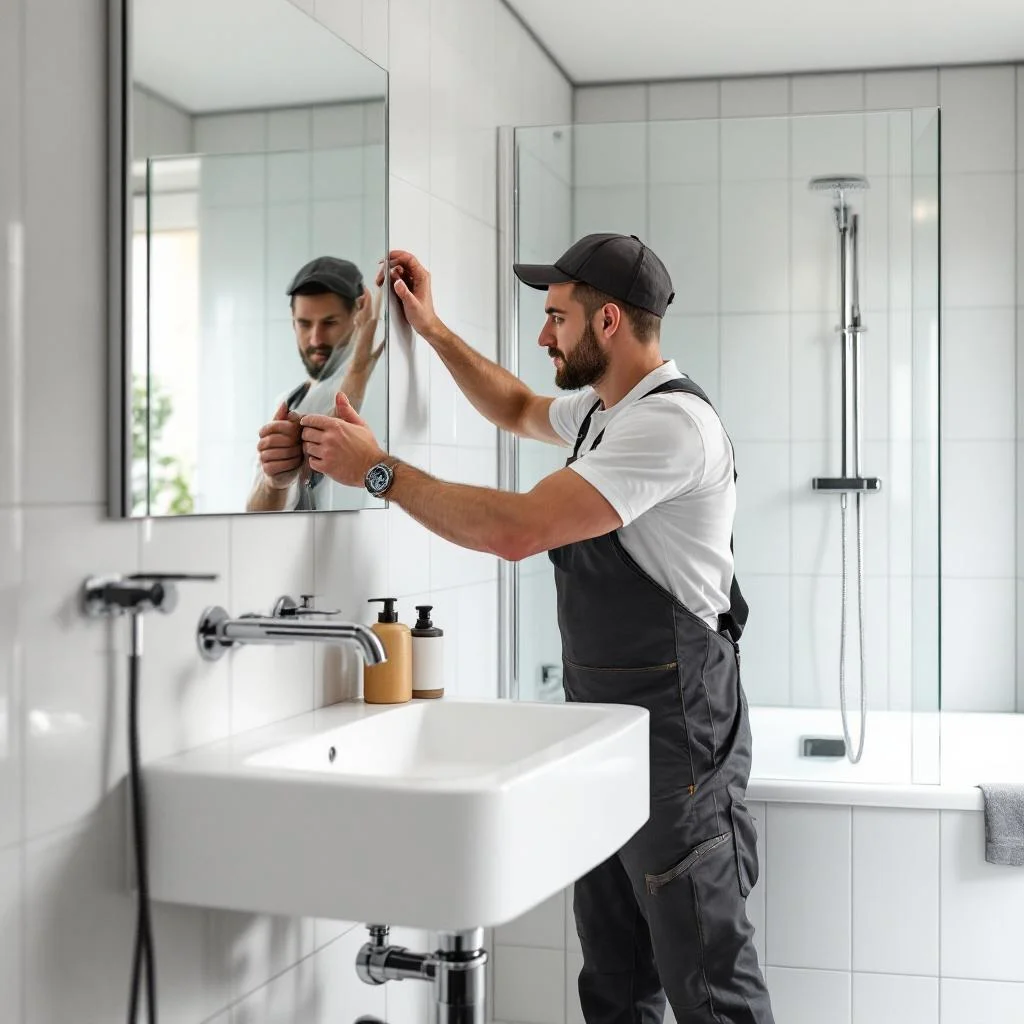
Are you looking for a plumber in Lancy for a leak, an ageing installation or a bathroom to redo? The municipality is made up of apartment buildings, houses and parks spread between Grand-Lancy and Petit-Lancy, and this mix of buildings shapes the type of work needed. This site’s matching service passes your request on to companies in the region, who get back to you to prepare a free, no-obligation quote.
Common plumbing work in Grand-Lancy and Petit-Lancy
The plumbing trade, or sanitary installer in Switzerland (trained to the CFC, the federal vocational certificate), covers far more than a dripping tap. In Lancy, requests generally vary according to the type of home:
- Leak detection and repair: a stain on the ceiling of the neighbour below, damp behind a kitchen unit, a water meter that keeps running while everything is off.
- Pipe replacement: cold water, hot water and drainage, especially when the original pipes are reaching the end of their life.
- Sanitary fittings: washbasin, toilet, shower, bath, taps, and connected washing machines and dishwashers.
- Water heaters and hot water production: replacement, servicing, connection.
- Unblocking and drainage: blocked stacks, traps, downpipes.
What differs from one home to another is access. In a house, the plumber often works directly in the cellar or utility room. In an apartment building, they have to deal with shared stacks, service ducts and neighbours.
Apartment buildings and houses: two approaches in Lancy
Lancy is a municipality of apartment-block neighbourhoods, but also of houses surrounded by greenery. Plumbing raises different questions in each.
The flat in an apartment building
In an older building, particularly a post-war one, the water stacks run through several floors and supply several homes. A leak in your flat may come from your neighbour’s, and vice versa. Depending on the period, the original pipes may be galvanised steel; in very old buildings, lead may even remain. A plumber can identify the material in place and tell you where your installation stands.
As many buildings in the canton of Geneva are managed by property managers (régies), the usual procedure is this: you report the problem to the régie, which hires a company or authorises you to do so. In jointly owned buildings, it is the administrator or the owners’ meeting that decides on shared areas.
The house and its own installations
A house owner makes their own decisions, but is also responsible for the whole installation: water supply, meter, buried pipes, garden watering, water heater. A garden and nearby parks sometimes mean outdoor pipes or watering connections to check before winter. Also think of unheated spaces, such as a garage or an annexe laundry room.
Geneva’s climate, water and pipes: what Lancy changes
The canton of Geneva is a very urban, city-like canton on the lake, with mild winters on the plain and hot summers in town. For plumbing, this has three practical consequences.
Frost is less of a concern than at altitude, but it should not be ruled out for pipes in an unheated room, an exposed facade or a garden shed. An outdoor tap should be drained before winter.
Hot summers put different demands on domestic hot water: a badly set water heater, or cold water pipes that warm up in a poorly insulated duct, are matters you can raise with the plumber.
Limescale depends on the water supplied. Hardness varies by region: to find out what it is in Lancy, contact the municipality’s water supplier. This is useful before choosing taps, a water heater or a possible water softener.
Steps to take before plumbing work in Lancy
Many small plumbing jobs require no permit. However, some situations call for checking before you sign:
- Changes to the building: moving a stack, drilling through a facade for a drain, creating a new bathroom. Building permits are issued by the canton, through the Office des autorisations de construire. Check with the municipality or the competent cantonal service whether your project is affected.
- Protected building or neighbourhood: the canton has protected neighbourhoods and buildings. If your building or house is one of them, work visible from the outside may be regulated. Find out before starting.
- Energy: if your project affects hot water production or heating, the cantonal energy law (LEn) and the cantonal energy office (OCEN) come into play. Subsidies from the Buildings Programme in Geneva depend on them; conditions and amounts are checked with the OCEN, never on the basis of a quote alone.
- Landlord’s or co-owners’ consent: as a tenant, you need the landlord’s or property manager’s consent for any change. In jointly owned buildings, shared areas are the responsibility of the community of owners.
Describing your plumbing job in Lancy properly
The quality of a quote depends on the precision of the request. For a plumber in Lancy as elsewhere, prepare the following:
- the type of home (flat or house), the floor, and whether there is a lift;
- the approximate age of the building and of the installation, if you know it;
- the exact problem: leak, smell, pressure drop, insufficient hot water, noise in the pipes;
- photos of the fittings, the meter and any visible connections;
- your status: owner, tenant or co-owner, and whether the property manager has been informed;
- your constraints: working hours, absences, access to ducts or cellars.
Comparing plumbing quotes in Lancy
Ask for several written quotes and read them line by line. A good quote specifies:
- the scope of the work and what remains excluded;
- the materials, with the brands and references of the fittings;
- labour, travel and the removal of old fittings;
- any related work: opening and closing partitions, tiling, painting, making good;
- the payment terms and the period of the work.
The cost varies according to the condition of the pipes, how easy it is to reach the stacks, the number of fittings, the quality range chosen and the extent of the finishing work to be redone. In an apartment building, access to the ducts and coordination with neighbours also weigh in. That is why no reliable figure can be given without seeing the installation: that is what the quote is for.
To get started, simply request a quote describing your work. The request is passed on to companies in the region, who will get back to you.
Useful pages for your project in Lancy
- The trade in general: plumber
- Overview of the municipality: works in Lancy
- The canton: canton of Geneva
- Other work in Lancy: electrician in Lancy, interior painting in Lancy, carpenter in Lancy
Updated 29 October 2026