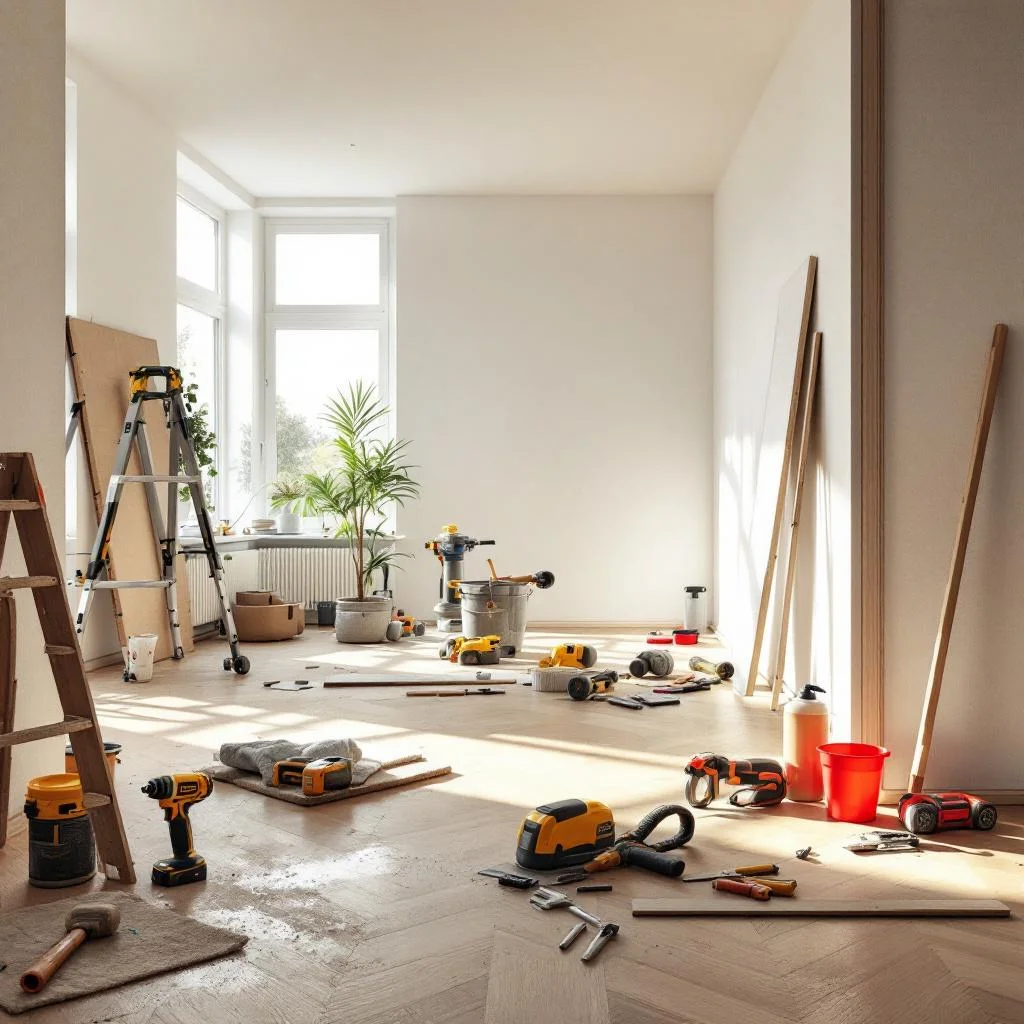
Are you looking for a tiler or a tiling project in Vernier? The commune, on the right bank of the Rhône, north-west of Geneva, brings together very different types of housing: long apartment blocks, lower-rise neighbourhoods, older buildings and industrial zones. What you have laid, and how, depends a great deal on where you live or work.
Tiling covers floor and wall laying, glazed wall tiles, mosaic, natural stone, screed and waterproofing beneath tiles in wet rooms. The reference qualification for the trade is the CFC (Swiss federal vocational certificate) for tilers.
Tiling in Vernier: work that changes from one neighbourhood to another
Vernier is not a uniform block. It includes Vernier-village, Aïre, Le Lignon with its very long apartment block, Châtelaine, not forgetting the industrial zones and the proximity of the airport. Each area brings its own kinds of requests.
In large rental developments, the most frequent job is renovating a bathroom or kitchen: replacing wall tiles and floor tiles, redoing the grout. The flats are numerous and often similar from one floor to the next, which makes quotes easier to compare, without removing the need to describe your own flat precisely.
In the lower-rise neighbourhoods and among house owners, you find more bespoke projects: tiling an entrance hall, a living room, a finished basement or a terrace. Small businesses in the industrial zones tend to think of floors for reception areas, toilets or utility rooms, where resistance to wear matters as much as appearance.
Bathrooms and kitchens in Le Lignon, Aïre and Châtelaine
In a wet room, the tiling is only the visible part. Beneath it lie the screed and, above all, the waterproofing, which protects the structure. In a shared building, a defect at this level does not stay in your home: the water runs down to your neighbour. That is why a serious quote for a bathroom mentions waterproofing, and not just the price per square metre of tiles.
A few points come up again and again on this type of job:
- removal of the old covering, which produces rubble and dust to be carried out from an upper floor;
- the condition of the substrate after removal, which may need repair before any laying;
- waterproofing around the shower, the bath and the drains;
- the choice of format: large tiles mean fewer joints, but require a very flat substrate;
- the connection with the plumbing, if the sanitary fittings are changed at the same time.
If your project also includes sanitary fittings, a plumber in Vernier usually comes in before the tiler, then returns for the final connections. For a whole kitchen, see the page on kitchen renovation in Vernier, where tiling is only one item among others.
In a very tall or very long building such as the one in Le Lignon, access also matters: lift, route to the flat, handling of bags of adhesive and boxes of tiles. These should be mentioned, as they affect working time and therefore the quote.
Uneven floors and underfloor heating: the older buildings of Vernier-village
Around Vernier-village, the buildings are older than in the large developments, and this is where floors raise the most questions. In an older house or small building, it is not unusual for the floor to be neither flat nor level. Laying tiles directly on such a substrate gives uneven joints and tiles that sound hollow.
The solution lies in preparation: levelling compound, a new screed or correction of the substrate, depending on the extent of the defect. This stage can represent a significant share of the bill, and it is often the source of the differences between two quotes: one includes it, the other ignores it.
If you are installing underfloor heating, tiling suits it well. The screed must then be chosen accordingly, and the heating is brought up to temperature following the installer’s instructions. Say so from the outset: a tiler who does not know cannot size the screed or plan the expansion joints.
For homes needing wider renovation, particularly in terms of energy, the page on thermal insulation in Vernier details work that sometimes comes before the floor covering.
Terraces, balconies and frost: tiling outdoors in Vernier
Geneva is a very urban canton, beside the lake, with mild winters on the plain and hot summers in town. That does not remove frost: a terrace or balcony in Vernier goes through freeze-thaw cycles, more or less frequent depending on the winter, and marked heat in summer.
Outdoor tiles are therefore not chosen like living-room tiles. You need a material suited to outdoor use, a surface that stays safe to walk on when wet, a slope that drains the water and a laying method designed to absorb temperature variations. An indoor covering laid outside splits or comes loose within the first winters.
On an apartment building balcony, first check what the managing agent or the co-ownership allows: load, water drainage, appearance from the street. On a house terrace, the main issue is waterproofing beneath the covering, if the slab covers a living space.
Permits, managing agents and co-ownership: the procedures in Vernier
Interior tiling does not in principle require a particular permit, but the rule depends on the scale of the project. In Geneva, building permits are issued by the canton, through the Office des autorisations de construire. If your work goes beyond simply replacing a covering, or concerns a building within a protected perimeter, ask the commune of Vernier or the competent cantonal service for confirmation before starting the job.
Most often, the real procedure lies elsewhere:
- Tenant: written consent from the landlord or managing agent is required. Many rental buildings in Geneva are run by managing agents, who may impose conditions on materials, working hours or restoration.
- Owner in co-ownership: consult the co-ownership rules, which may restrict the type of floor covering or set sound insulation requirements.
- House owner: the decision is yours, but a project that touches on energy, such as underfloor heating combined with other work, falls under the cantonal energy law and the cantonal energy office, on which the subsidies of the Buildings Programme (Programme Bâtiments) depend. Check with the office whether your project is concerned before ordering anything.
Also warn your neighbours of noisy work, such as the removal of old tiles.
Preparing your request and comparing tiling quotes in Vernier
One quote is only comparable to another if both respond to the same description. Before requesting a quote, gather this information:
- the rooms concerned and their type: wet room, kitchen, entrance hall, terrace;
- the approximate surface area and the condition of the existing floor or wall;
- the tiles you want: format, material, finish, or failing that the look you are after;
- the presence of underfloor heating, or the plan to install it;
- the floor, the lift and the access conditions;
- if you are a tenant or co-owner, the status of the landlord’s or co-ownership’s consent.
A good quote itemises the items rather than showing a single total: removal and disposal, substrate preparation, screed or levelling, waterproofing, supply of tiles or laying only, grout, finishing, and what is excluded. If a quote does not mention waterproofing for a shower, ask why.
The cost varies with the surface area, the condition of the substrate, the format and material chosen, the number of cuts and cut-outs, access to the property and the extent of the preparation. Natural stone or mosaic demand more care than a standard large-format tile. No reliable estimate can be made without knowing these elements: several quotes compared on the same basis will give you the best picture of your project.
Useful pages on tiling in Vernier
- Tiling: the trade in general
- Work in Vernier: all the work in the commune
- Canton of Geneva: the cantonal framework
- Kitchen renovation in Vernier
- Thermal insulation in Vernier
- Plumber in Vernier
Updated 29 October 2026