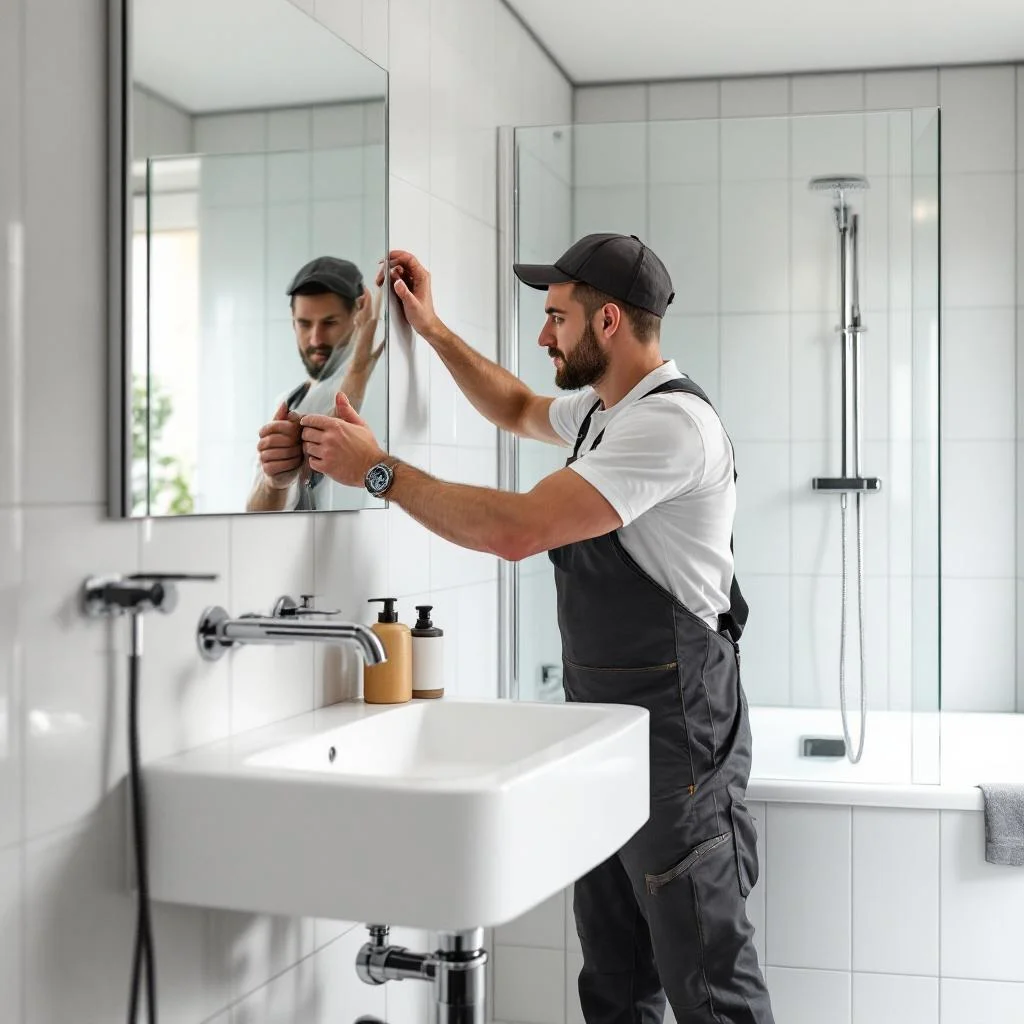
Are you looking for a plumber in Vernier for a leak, a bathroom to redo or ageing pipes? The commune brings together very different situations: apartment blocks, village houses, neighbourhoods close to industrial zones. Describe your work online: your request is passed on to craftspeople in the area, who contact you to prepare a free, no-obligation quote.
What a plumber does in Vernier, by neighbourhood
A sanitary installer works on cold and hot water, drainage and fixtures: washbasins, showers, bathtubs, toilets, washing machines, water heaters. They also trace leaks and replace old pipes. In Switzerland, the trade is learned through the CFC (federal certificate of proficiency) for sanitary installers.
In Vernier, this work takes different forms from one area to the next:
- Le Lignon and its very long apartment block: here, many jobs are carried out in flats within the same complex, with water and drainage risers shared between floors. A dripping tap seems quick to fix, but a leak in a riser affects the whole building.
- Vernier-village: there are more detached houses and smaller, older buildings, where the plumber is often called to modernise a bathroom or replace a boiler.
- Aïre and Châtelaine: a mixed built environment of apartment buildings and houses, where the installations have sometimes been reworked piece by piece over the years.
- The edges of the industrial zones: business premises, small workshops or shops may need suitable sanitary facilities, water points or drainage.
Rental buildings in Le Lignon and Châtelaine: go through the property manager
Geneva has many rental buildings run by property managers (régies), and Vernier is no exception. If you are a tenant, a plumber will generally only step in with the agreement of the owner or the property manager, especially for anything involving pipes, risers and fixtures supplied with the home.
In practice:
- report the problem to the property manager in writing, with photos and the date you noticed it;
- ask who orders the work and who pays for it, depending on whether it is building equipment or a fixture you installed yourself;
- if the property manager allows you to request a quote, attach their agreement to your request.
In a co-ownership, it is the administrator or the owners’ meeting that decides on work to the common parts. A main pipe running through several apartments cannot be replaced by one owner alone.
Older buildings in Aïre and Vernier-village: pipes to keep an eye on
The oldest buildings in the commune may still have original pipework: galvanised steel and, in very old buildings, sometimes lead. Galvanised steel corrodes from the inside over time, which can reduce flow or discolour the water. Lead, for its part, calls for particular attention in old buildings: if you suspect such a pipe is present, say so in your request so that the plumber can look for it.
In post-war buildings, the installations were often designed in one go. They therefore age together: when one floor has problems, others sometimes follow. A survey before redoing a bathroom avoids fitting new fixtures onto tired pipes.
Water, limescale and frost: what matters near the Rhône and the lake
Vernier lies on the right bank of the Rhône, in a very urban canton close to the lake, with mild winters on the plain and hot summers in town. Frozen pipes are therefore uncommon on the plain compared with higher altitudes, but they remain possible in an unheated cellar, a garage or an outdoor pipe during a cold snap. A poorly protected garden tap or laundry-room supply is the usual weak point in houses.
As for limescale, water hardness depends on the network that serves you. Ask the commune’s water supplier: you will know what to expect for your water heater, your taps and your dishwasher. A plumber can then advise you on maintaining or replacing the most exposed appliances.
Permits and energy in Vernier: what the canton of Geneva provides
For routine plumbing, the question is simple: repairing a leak or replacing a tap does not in principle require any particular procedure. As soon as the project changes the structure, the wet rooms or the building’s technical installations, things may be different.
- Building permits are issued by the canton, through the Office des autorisations de construire.
- On energy, the cantonal energy law (LEn) applies, and the Office cantonal de l’énergie (OCEN) manages the Buildings Programme subsidies in Geneva. They mainly target building energy; check whether your hot water project falls within them.
- Protected neighbourhoods may impose constraints on façades or openings.
Before starting larger works, check your situation with the commune of Vernier or the relevant cantonal department. Do it before signing the quote, not after.
Describing your plumbing work in Vernier so you can compare quotes
The more precise your request, the more comparable the quotes. Include:
- the address or at least the neighbourhood (Le Lignon, Aïre, Châtelaine, Vernier-village), the type of home and the floor;
- whether you are an owner, a tenant or a co-owner, and whether the property manager or administrator has been informed;
- the nature of the problem: visible or hidden leak, slow drain, no hot water, fixture to replace;
- the approximate age of the building and what you know about the pipes;
- photos of the areas concerned and of access (cellar, service shaft, communal room).
A good quote itemises labour, fixtures and supplies, travel, removal of old equipment and making good any opened walls. It also states what is included or not: tiling, painting, masonry work. If an item depends on what is found behind a wall, the quote should say so.
The cost varies with the accessibility of the pipes, the number of water points affected, the materials chosen, the condition of the existing installation and whether partitions need to be opened. Two apparently similar flats in the same block can therefore receive different quotes. Compare the contents before the totals.
Once your description is ready, you can request a quote: it is passed on to craftspeople in the area, who will contact you.
Other useful pages for your project in Vernier
- The trade in general: plumber
- All the work in the commune: work in Vernier
- The canton: canton of Geneva
- In the same commune: electrician in Vernier, interior painting in Vernier, carpenter in Vernier
Updated 29 October 2026