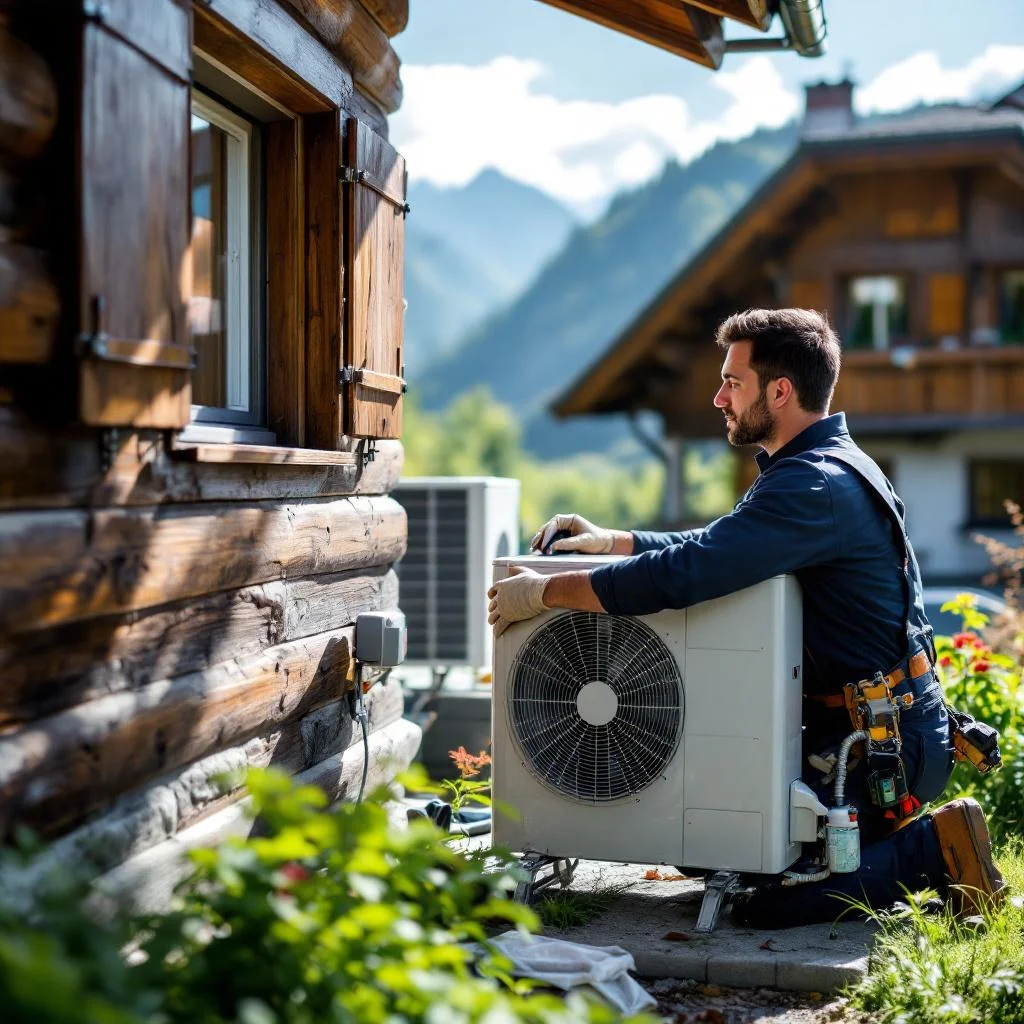
Are you looking for a heating engineer in Geneva to replace an ageing boiler, restore an installation or rework the controls in your building? A heating engineer installs, services and replaces heating systems, from oil to gas, from wood to heat pumps, not forgetting radiators and underfloor heating. In Geneva, a very urban city-canton, most jobs take place in occupied buildings, with neighbours, a property manager and cantonal rules to respect.
On sos-travaux.ch, you describe your project online; your request is passed to tradespeople and companies in the area, who get back to you to prepare a free, no-obligation quote.
The most common heating jobs in Geneva buildings
Geneva is a dense city, where districts such as the Pâquis, the Eaux-Vives, Plainpalais, the Jonction and Champel have many rental buildings. In this kind of building, the heating engineer most often works on a shared installation: a boiler in the basement, risers, radiators in each flat, valves and controls.
The requests we see most often:
- replacing a boiler at the end of its life, whether it runs on oil or gas;
- switching to another way of producing heat, for example a heat pump or a connection to district heating where it is available;
- replacing radiators, thermostatic valves or circulating pumps;
- finding the cause of a radiator that heats poorly, noise in the pipes or a pressure that keeps dropping;
- installing or adjusting controls, so that the heat really follows needs;
- servicing and adjusting an existing installation before winter.
In a house or small property in the neighbouring municipalities, the subject is simpler: a single owner decides. In the city, you first need to know who is responsible for the installation, which determines everything else.
Lakeside, mild winters: what the Geneva climate changes for heating
The canton lies by the lake, with mild winters on the plain and hot summers in the city. This context has practical consequences for a heating project, without any need to put figures on it.
First, mild winters on the plain do not remove the need for a well-adjusted installation: an oversized boiler that constantly switches on and off is a source of wear and waste. Ask the tradesperson how they size the output and on what basis. A good quote explains this choice instead of simply repeating the output of the old appliance.
Second, summer heat in the city raises the question of the building’s thermal inertia and, sometimes, of cooling. Some heat pumps can also produce cold; if this interests you, say so in your request rather than after signing.
Third, domestic hot water matters all year round, not only in winter. In a building, it is often produced by the same boiler room, and the way it is produced must be dealt with together with the heating.
Old town, protected districts and difficult access
The old town stretches over a hill around Saint-Pierre Cathedral. Narrow streets, stairs, vaulted cellars, old buildings: bringing in a boiler or an outdoor unit is more complicated there than in a recent building. The heating engineer needs to see the premises before pricing, because access, the routing of pipes and the location of the appliances affect both cost and feasibility.
In the old town and in protected districts, some work affecting the outward appearance of a building, such as a heat pump unit on a façade, a flue or a chimney, may require a permit, or even be refused. Do not take anything for granted: ask the Office des autorisations de construire (building permits office) before choosing your system.
Even outside protected areas, a Geneva job needs to be prepared with traffic in mind. With trams, buses and dense streets, delivering heavy equipment and parking a site vehicle take organisation. Mention the floor, the presence of a lift and access to the boiler room in your request.
Energy law, OCEN and rules to check before ordering
Replacing a fossil-fuel heating system is governed by the cantonal energy law (LEn), which may require or restrict it depending on the canton. In Geneva, the Cantonal Energy Office (OCEN) is the contact for these questions. In practice:
- before replacing an oil or gas boiler with an appliance of the same type, check with OCEN what is permitted;
- ask the tradesperson whether they know the requirements in force and whether they handle the formalities that fall to them;
- be aware that chimney sweeping and boiler inspections are regulated by the canton; ask the relevant department about the obligations for your installation.
The Buildings Programme subsidies in Geneva also depend on OCEN. Their conditions, amounts and deadlines are not given here, because they can change: ask directly before ordering, and keep the answer in writing. A subsidy generally has to be requested before the work begins; check this point.
Property manager, owner, co-ownership: who decides what
Geneva has many rental buildings run by property managers. This reality shapes your steps.
- You are a tenant. The shared heating is not yours. Report the breakdown or the problem to the property manager, in writing, stating the date and the symptom. For work inside your flat, for example replacing a radiator, ask the landlord’s agreement before hiring a tradesperson.
- You own a flat in a co-ownership. The shared boiler room depends on the meeting of co-owners. Replacing a boiler is a collective decision; your role is often to have the subject put on the agenda with quotes in hand.
- You own a house. You decide alone, but you remain subject to the cantonal energy rules and, depending on the location, to a possible building permit.
- You represent a small business. Check what your lease says about technical installations before hiring anyone.
Preparing your request and comparing quotes
The more precise your description, the more comparable the offers will be. For a heating engineer, state:
- the type of building (apartment block, house, flat) and its district;
- the current system: oil, gas, wood, heat pump or district heating, and its approximate age;
- the problem observed or the project you have in mind;
- access to the boiler room or to the radiators concerned;
- who decides: you, the co-ownership or the property manager;
- your wishes on timing, taking the heating season into account.
A good quote details the removal of the old equipment, the proposed appliances with their reference, the connections, the controls, the commissioning and the disposal of waste. It also states what is not included, such as masonry, electrical or painting work.
The cost depends on several factors: the chosen system, the output required, the condition of the existing pipework, the difficulty of access, the extent of related work and the administrative steps. That is why no serious figure can be given without a visit: only a quote, prepared on the basis of your situation, will give you a price. Do not compare totals alone: two offers that do not cover the same scope cannot be compared.
When you are ready, you can request a quote in a few lines; the tradespeople who get back to you then prepare their offer, free and without obligation.
Keep exploring around Geneva
- the trade page: heating engineer;
- the city page: work in Geneva;
- the canton page: canton of Geneva;
- in the same municipality: heat pump in Geneva, thermal insulation in Geneva and kitchen renovation in Geneva.
Updated 29 October 2026