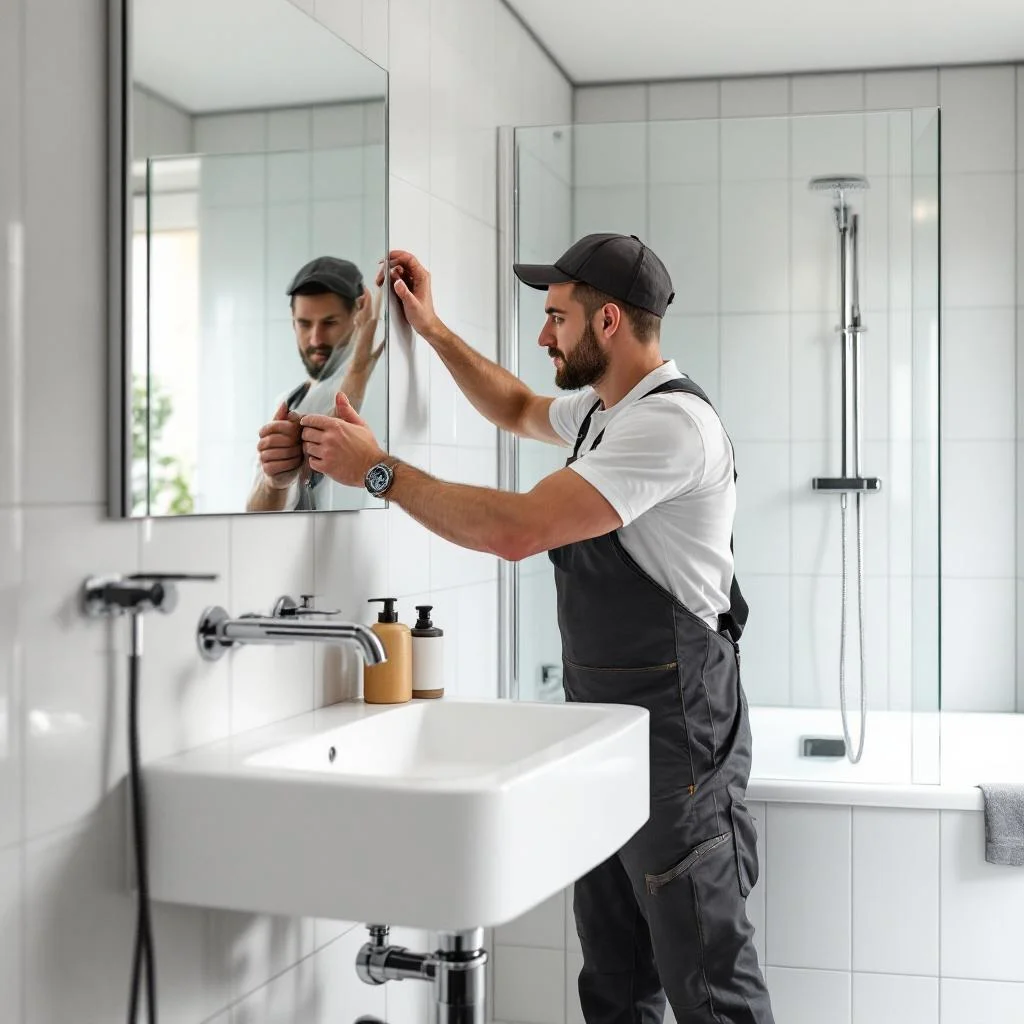
Are you looking for a plumber in Martigny for a leak, a bathroom to redo or pipes that are getting old? This page presents the most common sanitary installation work in the town at the bend of the Rhône, what the local building stock changes for it, and how to ask for comparable quotes. Your request is passed on to craftspeople and firms in the region, who contact you for a free, no-obligation quote.
A plumber’s work in Martigny, from the centre to the hillsides
A sanitary installer works on cold and hot water, on drainage and on appliances: washbasins, showers, bathtubs, toilets, sinks, water heaters. They also trace leaks and replace old pipes.
In Martigny, this work is spread across very different types of housing. The town spreads across the plain, around the bend of the Rhône, and climbs up the hillsides. There are rented apartment blocks, villas and older buildings near the centre, not far from the Roman amphitheatre and the Pierre Gianadda Foundation. Each type of building calls for its own work:
- Leak or suspected damp: a stain on a neighbour’s ceiling, a meter that turns while everything is closed, a damp smell in a utility cupboard. The plumber locates the leak before opening up the walls, which limits the damage.
- Pipe replacement: in older buildings, galvanised steel corrodes from the inside; in very old buildings, lead may still be found. A diagnosis comes before replacement.
- Bathroom or kitchen renovation: removal of old appliances, reworking of supplies and drains, installation of the new fittings.
- Water heater and taps: replacing a scaled-up boiler, worn mixer taps, traps or stop valves that no longer close.
Old buildings, post-war blocks, villas: what Martigny changes
A crossroads town, open towards the Great St Bernard and Chamonix, has grown in stages. This mix shows beneath the tiling as much as on the façades.
In older buildings, the risers and concealed pipes have often been altered over the decades. The plumber must first understand what exists: where the pipes run, which parts have already been replaced, which materials are present. If you live close to the Roman monuments or in an area of heritage character, a change visible from outside, such as a new duct on the façade, deserves a prior check with the municipality.
In post-war blocks, the pipes are sometimes nearing the end of their life. Replacing a riser affects several apartments: it is prepared with the property manager or the co-ownership, who coordinates access and water shut-offs.
In hillside villas, pipe runs are longer, with technical rooms, laundry rooms and sometimes outdoor watering systems. Shutting down the outdoor water circuits before winter is part of the usual routine of the trade.
Limescale and frost: two constraints to anticipate
The canton of Valais is known for its dry, sunny Rhône valley, hot in summer, with colder, snowier side valleys. For plumbing, this translates in two ways.
Limescale. Depending on the area, the water is more or less hard, and scale damages water heaters, shower heads and mixer taps. I do not have a reliable figure to give you for Martigny: ask the municipality’s water supplier for the water hardness. This information helps the craftsperson choose the equipment and tell you whether regular maintenance or a treatment is worthwhile.
Frost. On the plain, winter is generally less exposed than in the side valleys. But if you own a chalet or second home at altitude above Martigny, the risk is real: an unoccupied, unheated home sees its pipes freeze, burst, then leak when the thaw comes. Have the circuits drained, exposed passages insulated and outdoor connections protected before the bad season.
Formalities: permit, landlord, co-ownership
Three questions arise before signing a quote.
- Is a permit needed? In Valais, the building permit is issued by the municipality within the building zone, and by a cantonal commission outside it. A simple appliance replacement does not generally require one, but a major alteration, a change to the layout or work on a protected building may. Ask the municipality of Martigny before the work begins.
- Are there energy aspects? If your work involves hot water production or heating, the cantonal energy and hydropower office runs a subsidy programme. I cannot tell you whether it covers your project or on what conditions: ask this office before ordering, as some grants must be requested in advance.
- Who decides? As a tenant, you need the landlord’s agreement, and the work generally goes through the property manager. As a co-owner, anything affecting common areas (risers, drainage pipes, boiler room) is a matter for the assembly or the administrator. For a chalet or second home, also check what the federal law on second homes provides in the municipalities concerned.
Preparing your request and comparing quotes
A useful quote starts with a precise description. Note:
- the type of home (apartment, villa, chalet), the approximate age of the building and the floor;
- the problem observed: where, since when, with what signs (damp, pressure drop, rusty water, noise in the pipes);
- what you want: repair, replace, or renovate completely;
- access constraints: stairs, lift, technical room, whether the water can be shut off or not;
- photos of the appliances and the areas concerned.
When the offers arrive, compare them point by point. A reliable quote details the dismantling and removal of what exists, the supplies with their references, labour, restoration of surfaces and the conditions in case of the unexpected, for example a pipe in worse condition than expected behind a wall. The cost depends on the accessibility of the pipes, the number of appliances, the materials chosen, the extent of the restoration and the urgency. That is why no reliable figure can be given without seeing the premises.
Ready to move forward? You can request a quote by describing your situation: craftspeople in the region then contact you, with no obligation on your part.
Useful pages around Martigny
- The trade: plumber
- The town: work in Martigny
- The canton: canton of Valais
- Other work in Martigny: electrician in Martigny, interior painting in Martigny, carpenter in Martigny
Updated 29 October 2026