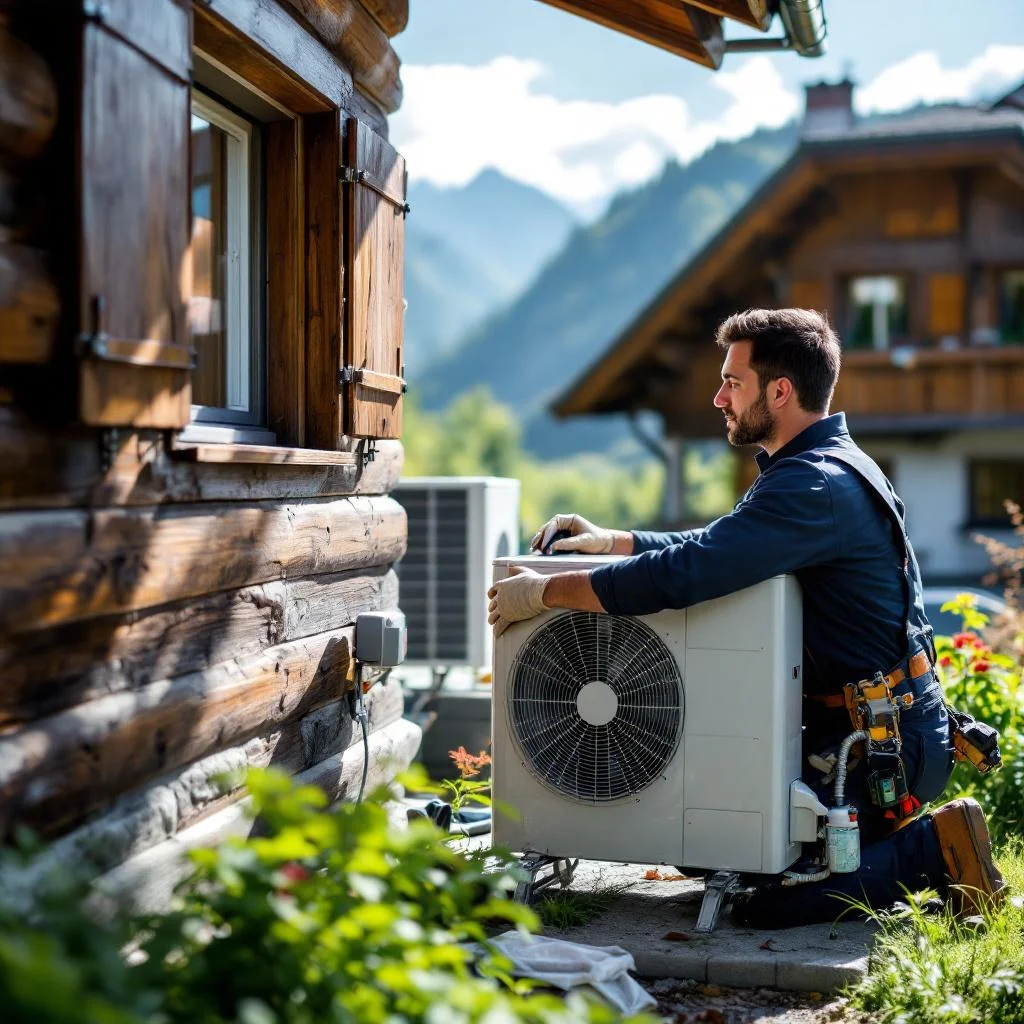
Looking for solar panels in Fribourg? The bilingual city, set on a spur above the Sarine, offers a wide variety of roofs: apartment blocks, neighbourhood houses, university buildings and, at its heart, a medieval old town among the largest in the country. Installing solar in Fribourg therefore often means working with older buildings. This page helps you frame your project before you request a quote.
Photovoltaic or thermal on Fribourg roofs
There are two technologies. Photovoltaic panels produce electricity that you use on site or that is fed back into the grid. Thermal collectors heat domestic hot water, sometimes as a supplement to the heating.
In Fribourg, starting points differ a great deal:
- Houses and small buildings in residential districts: unobstructed roofs, often simpler to equip, with a usable surface that is easier to estimate.
- Apartment blocks: the question is not only technical; it concerns the use of the electricity produced, the shared areas and the owner’s consent.
- Buildings near the university and large volumes: larger roofs, but subject to the same procedural rules.
- Old town roofs: here, appearance and the protection of the building weigh as much as yield.
The Bourg, the Auge and the Neuveville: the heritage challenge
Fribourg’s old town stretches around the bend of the Sarine: the Bourg district on the plateau, the Auge below near the river, the Neuveville along the slope. The roofs there are seen from afar, from the heights as well as from the bridges and the cliffs bordering the river. That is precisely what complicates solar.
The federal principle is that a solar installation that is well suited to a roof in a building zone generally only requires a notification. But this simplification does not apply to a cultural property or in a protected site. In those cases, a building permit is still required and the project is examined with regard to the protection of the place.
In practice, if your building is in one of these districts:
- first ask the municipality whether the building is protected or located within a protected perimeter;
- ask what the relevant departments expect for a visible project (position, colour, integration into the roof);
- do not order anything before you have a clear answer.
An installer used to older buildings may also suggest less exposed roof slopes, an inner courtyard or a less visible outbuilding, rather than the slope facing the street.
Orientation, terrain and snow
Fribourg is built on levels: the upper town, the slope of the Neuveville and the valley floor of the Auge do not have the same exposure. A slope shaded by a neighbouring building or by the hillside produces less than an unobstructed roof. Before sizing the system, have the orientation, the pitch and the shadows cast by neighbouring buildings or vegetation assessed.
The canton has snowy winters, especially in the Pre-Alps and in the Gruyère. On the plateau and in town, snow is less pronounced, but it does occur: the installer must allow for the load on the roof and for how snow slides off or builds up, notably above a street or a passage. On an old roof frame, have the roof’s capacity to carry the whole installation checked before any work. A roof due for renovation may justify coordinating the two projects.
The procedures: notification, permit, FRIAC
In the canton of Fribourg, building permit applications go through the cantonal FRIAC platform. The permit is issued by the prefecture or by the municipality depending on the type of work. For a solar installation, it is the nature of the building and of the site that determines whether a notification is enough or a full permit is required.
Keep three points in mind:
- Notification or permit: in a building zone, on an unprotected roof, a notification is in principle sufficient; on a protected property or in a protected site, expect to need an authorisation.
- Who files the application: often the installing company, but check this in the quote.
- Energy department: the cantonal energy department manages the canton’s subsidy programme. Conditions and amounts change, so it is the body to ask about the current situation.
For any question about procedure, contact the municipality of Fribourg or the relevant cantonal department: their word is final.
Owner, landlord, co-ownership
The rules on who decides vary according to your status:
- House owner: you decide, subject to planning and protection rules.
- Co-owner: the roof is a shared area, so the decision goes through the co-ownership.
- Tenant: only the landlord can authorise an installation on the roof. Some projects are set up on the landlord’s initiative, with the tenant then benefiting from the energy produced.
In all three cases, note who gave consent and in what form before signing anything.
Preparing your quote request and comparing
The more precise the request, the more comparable the quotes will be. Please state:
- the address, the district and the type of building (house, apartment block, older building, possibly protected);
- the shape of the roof, its material, its condition and the approximate age of the covering;
- your goal: producing electricity, heating water, or both;
- your usual consumption, if you know it, and whether you have a heat pump or a planned charging point;
- your status (owner, co-owner, tenant) and the consent obtained;
- photos of the roof and of the surrounding shadows, if possible.
A good quote details the equipment (panels, inverter, any storage), the installation, the grid connection, the administrative procedures included, the scaffolding and any restoration of the roof. It also states what is not included. The cost varies mainly with the size of the installation, the difficulty of access to the roof, the type of covering, the complexity of the connection and the constraints of protecting the site. Compare the services line by line, not just the total. Subsidies, federal and cantonal, are deducted separately: ask how they are taken into account.
Ready to move forward? You can request a quote: you describe your project, the request is passed on to tradespeople and companies in the region, who contact you to prepare a free, no-obligation quote.
Useful links around Fribourg
- The trade in general: solar panels
- The city: work in Fribourg
- The canton: canton of Fribourg
- Other work in the municipality: windows and double glazing in Fribourg, heat pump in Fribourg, kitchen renovation in Fribourg
Updated 29 October 2026